Hidden destinations
When your opponent moves, you learn the piece — not from or to. The move list shows a symbol and an ellipsis, not a square.
Chess with hidden information
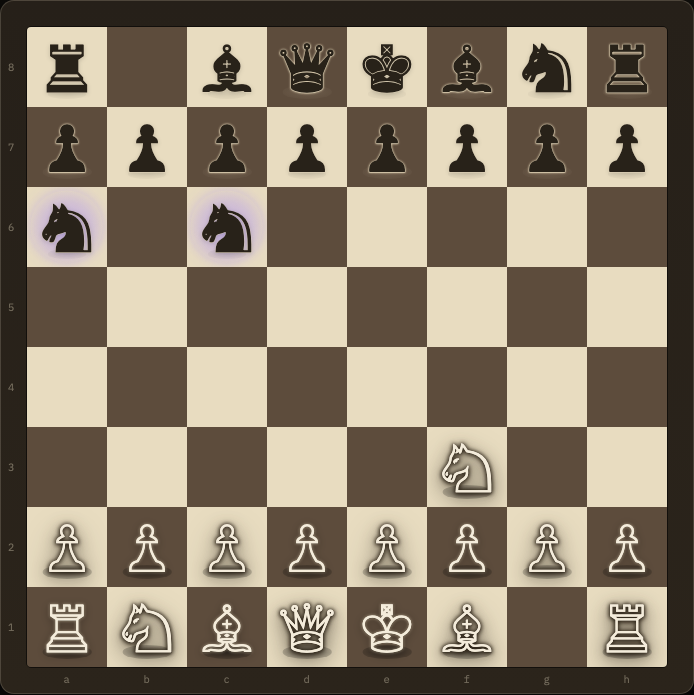
You learn which piece moved — never where it went. Violet ghosts mark every possibility. Your attacks measure them into fact.
You played Nf3. Black moved their knight — now make your move.
That's the whole trick.
Create account to play full gamesHow it works
Standard chess rules. One twist: your opponent's quiet moves hide their destination. Deduction, bluffing, and probing — played on a board that only resolves when you look.
When your opponent moves, you learn the piece — not from or to. The move list shows a symbol and an ellipsis, not a square.
The piece spreads to every square it could legally reach. Violet ghosts pulse on your board. Amber pieces are what you know for certain.
When your certain pieces threaten a square, the game resolves whether a ghost is really there — and narrows what your opponent knows about you.
In the game
Opening uncertainty
Black develops a knight after your Nf3. You know it moved — you see it on a6 and c6 at once. Only one is real.
Compounding uncertainty
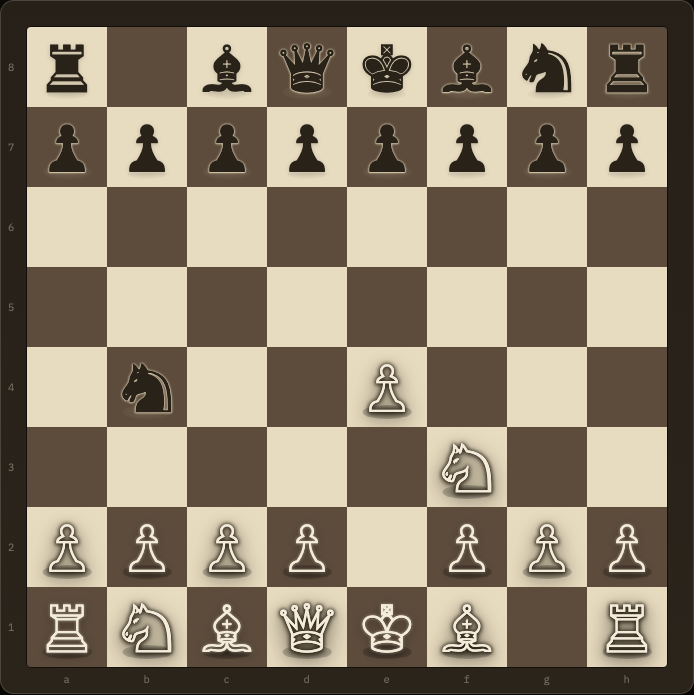
Move the same piece again without being seen — its ghosts spread to every square it could have reached from each possible position. One knight, three squares.
Perspective
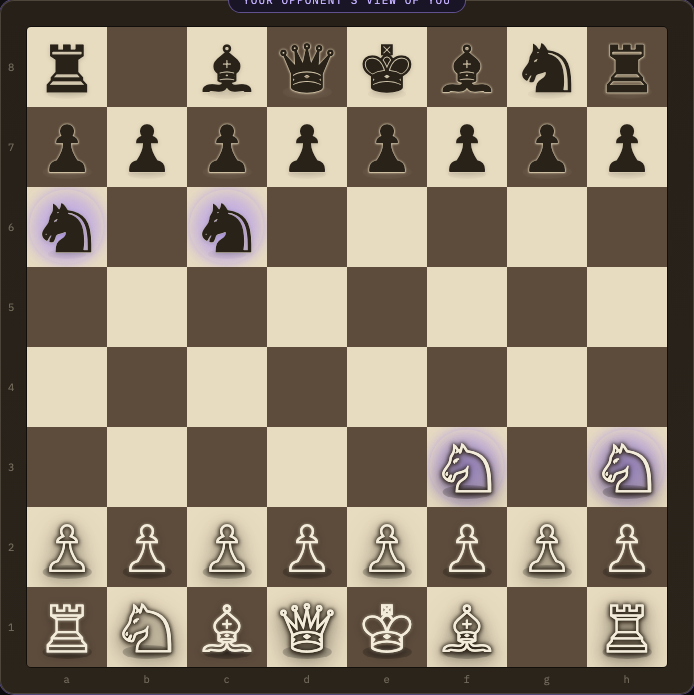
Toggle the view mid-game. See your own pieces the way they see them — certain or spread across the board.
Full chess